2014年11月27日 星期四

受尊敬的捐助人或乞丐?

Worthy Donors or Beggars?
受尊敬的捐助人或乞丐?

【氣質來自禪學,同樣的一件事 ~ 也可以看出一個人的質地】

那天路過國貿,是重慶路上最繁華的路段。

一個乞丐跪地乞討。是個老人,沒有下肢。一寸寸地爬行。
路人皆側目,無表情。我順手掏出一塊錢,拿給了那乞丐,動作嫻熟。
沒走幾步,見對面 也走來一個女人。

女人衣衫華貴,妝容精緻。很細款。
她從國貿剛買完東西出來,手里大包小包。
走到乞丐面前時,她停下了腳步,想掏錢,卻騰不出手來。

乞丐“善解人意”地趴在地上擺了擺手,示意女人離開。
但女人卻突然蹲下了身體,我以為她是想近距離地訓斥乞丐幾句,
卻見她用騰不開的手和眼神示意乞丐自己動手去掏她的腰包!

乞丐的手,髒到不能再髒,黑得像剛撿完煤渣。
可那個女人就那樣蹲在乞丐的面前,任由那髒手去掏她貼身的腰包!

乞丐掏了,是一張10元的鈔票。女人站起身,就急匆匆地離去。
我怔住了!彼時,我扔錢的動作使我顯得很高貴,但眼前的場景,卻令我驚訝。

不是施捨得錢多錢少的問題,是我看見了我靈魂深處的某種傲慢,某種偏見,某種如乞丐般的卑微。

我以為我這弧度優美的一扔,是我的施捨,是我的恩賜,是我強勢對弱勢的憐憫。
而事實上,我的淺薄和狹隘是多麼地不堪一擊!

女人那一蹲,蹲出了她的高貴。這樣的女人,可愛之外,還可敬。
【有錢施捨時,也要有歡喜心,與尊重被施捨者的尊嚴】

11/27/14


2014年11月26日 星期三

Lady Gaga面對太平洋的豪宅

Lady Gaga's Oceanfront Malibu Estate- 價值2,300萬美的臨海豪宅- 建坪10,000呎, 地大


Gaga Goes to Malibu

Pool Party
Room to Run


Pretty Pergola
Golden Afternoon
Kitchen Gathering


Take a Seat
Open Air Living


Sparkle & Shine

En Suite

Grandiose Living

Warm Welcome
Seaside Serendipity

Sea Breeze


11/26/14


外電看台灣選舉

Taiwan election: Wild, wooly, and partly a referendum on China- 台灣選舉, 狂野、粗暴、局部是對中國的一項公投

The Taipei mayor's race is the most watched, but there are 10,000 offices to fill on Nov. 29. The races are marked by mud-slinging and new debates over Chinese nationalism and Taiwanese identity. - 台北市長選舉是最受注目,在11/29有100位職位要產主。這些選戰是泥巴戰與爭辯中國國家主義與台灣認同-

柯P使國民党頭疼, 北京緊張

11/26/14

Taiwan’s young democracy puts down deeper roots with every election cycle, and the island holds an important vote this weekend with 20,000 candidates for more than 10,000 offices.
The most watched election is for mayor of Taipei, where candidate Ko Wen-je is causing panic in Taiwan's ruling party and making Chinese leaders inBeijing nervous.
A newcomer to politics, Mr. Ko has become a lighting rod for debates over national identity and traditional values in Taiwan. The independent candidate is receiving prominent media coverage, which he has been using to step outside mainstream politics and challenge the establishment.

By , Correspondent 

這是中國經濟奇蹟的結束

2014_11_21_Cover_600 x 800

Is This the End of China's Economic Miracle?-這是中國經濟奇蹟的結束

Ma Jijiang and his once poor family are the flesh and blood of China’s modern economic miracle, living proof of how radically the country has been reshaped since the late Deng Xiaoping changed the world in 1978 by proclaiming that to get rich is glorious and launching China’s experiment with market economics.
Ma grew up as the only son of peasants in central Henan province. In the late 1990s, his father, a factory worker, suffered an industrial accident that caused him to lose the lower half of his left leg to amputation, ending his working life. His mother, Hui-fang, was a wheat farmer, her skin coarsened by days working in Henan’s broiling summer sun. The family used to live off a dirt road adjacent to the wheat fields in which Hui-fang toiled, in a tiny wooden house lit by a single light bulb.
No longer. Ma was an uncommonly brilliant student, and when he took China’s famous (or, to its critics, infamous) college entry exam, he finished ahead of all the other students in his village. That earned him a ticket to Beijing’s prestigious Tsinghua University, known as the “MIT of China,” where he earned a degree in electrical engineering. That, in turn, led to a job at a company in Shenzhen, the bustling city that abuts Hong Kong, for a company that, back when he joined, few outside the country had ever heard of: Huawei. The year was 2001, and China was about to become a member of the World Trade Organization (WTO), formally rejoining the world trading system, and the global economy.
Today Ma still works at Huawei, as a senior engineer writing software. His parents moved to Shenzhen and live in a small but tidy apartment their son bought them shortly after he got his job at the company known as the Cisco of China. The value of that small apartment has skyrocketed since Ma bought it, as has the unit he bought for himself and the woman who is now his wife. From the day he took his college exam to the day he signed on at Huawei, it had been less than five years—and a poor family’s life has been utterly transformed.
Stories like that one are commonplace in modern China. They are the product of economic transformation and hyper-growth, China’s relentless charge from an impoverished, centrally planned economic backwater to the world’s second largest economy.
The era that brought the Ma family—and so many millions of others—from poverty to relative economic security is now over. With every new economic indicator released, it’s become clearer that the period of China’s hyper-growth has passed. The decades-long push into manufacturing, export-led growth, and real estate and infrastructure investment—which propelled growth for more than 30 years—has run out of steam. Furthermore, since the global financial crisis of 2008-2009, China has relied on massive infusions of credit to prop up its economy, and data show that the growth bang for the credit buck has diminished considerably. In 2008, banks had assets of roughly $9 trillion on their balance sheets. By the end of this year, according to Charlene Chu of Autonomous Research Asia, that will reach $28 trillion. Yet growth is decelerating sharply, likely to sink to 6.8 percent next year and 6.5 percent in 2016, according to the most recent forecast by Wang Tao, the chief China economist at UBS.
11_28_China_02The Shanghai skyline illuminates the night sky. 
After years of double-digit annual growth, that’s a level that makes China’s leaders nervous. To the Communist Party of China, which has ruled the nation since 1949, social stability matters above all, and growth that falls too far below 7 percent could be dangerous for them. The prospect of young college graduates not being able to find jobs, or of poor farmers migrating to new urban areas only to be unable to find work, or of large firms going bankrupt, triggering layoffs, worries China’s leadership.

11/26/14

外文系畢業生可以跨界

外文系畢業生可以跨界,
正如劇場不必是文創產業
今年九月,大約是大學開學之際,在臉書上看到許多朋友轉載了一篇自由時報的新聞,聳動的標題寫著:「英文系沒前途? 17系所改名、停招」,文中數據更以副標標明「畢業生近七成跨域轉行」。看到這則新聞,一瞬間覺得好像全台灣大專院校的英/外文系即將要被學子遺棄,淹沒在時代潮流中了。
這時,我腦海中忽然浮現了百老匯音樂劇《Avenue Q(Q大道)》以可愛芝麻街人偶演唱的開場歌曲〈What Do You Do with a B.A. in English?〉(英文系畢業能幹麼呢?),歌詞是這樣唱的:「讀了四年的書,只換得這張沒用的文憑,連帳單都付不起,因為我實在是沒什麼養活自己的本領,這是借鏡沒有我容身之地 。」[註1] 在幾乎人人都會講英文的美國,會有這樣的焦慮的確是可以想像的。但在台灣,當英文好和國際觀被放上等號,英/外文系曾是如此光鮮亮麗,擁有「和國際接軌」的美好前景;如今,畢業生前景竟然大受威脅,好像真的成了一件很可怕的事!
不過,所謂「畢業生近七成跨域轉行」倒令我困惑不已。既然如此,英/外文系的本行到底是什麼?想想同樣也拿了這張據說是「沒用的文憑」,畢業後在表演藝術領域(俗成劇場圈)打混的我,身邊一堆學長姊、學弟妹,還有好多同樣英/外文背景出身的劇場人,有人和我一樣寫文章、有人寫劇本、有人是演員、有人當導演、還有人成了燈光/舞台/服裝設計。大家或多或少都得應付這樣的問題:「那你怎麼會外文系念一念,轉行來做劇場?」講得好像英/外文系畢業,真的有這麼一個本行。所以這本行是英文老師嗎(但又不是人人都修過教育學程)?還是翻譯(照這樣的思維,那恐怕還要先雙修個中文)?說實在的,我實在想不出外文系的「本行」應該是什麼。於是,我也從不覺得在劇場的英/外文人是什麼誇張的跨域轉行。
會被問到這個問題,大概又回到了台灣教育莫名的「一個蘿蔔一個坑」之直線思考。從小,我們接受的就是是非題、選擇題的填鴨教育,被規定要在限定的範圍內找到正確答案(這也代表了在正確答案之外的,都是錯誤答案),卻少有人讓我們知道,教育與正確答案無關,而是一種「教我們如何找答案」的訓練。很不幸的,許多在台灣長大的小孩,選科系、找工作,依然像是現實人生的選擇題上演,在有限的選擇中找到那個「正確答案」(雖然這道選擇題,可比過去考卷上出現過的複雜多了)。
說到這裡,還是再來聊聊外文和戲劇的關聯好了。在這個一切講究數據的年代,我始終不願相信數據是呈現「真相」的唯一途徑,所以我也無法讓數字說話,透露究竟有多少劇場人,拿著英/外文學位行走江湖,每年上升下降的比率又有多少。我只知道,英/外文系的領域很廣,每所學校又都有自己的發展重心,對於「以文學為重」的外文系所而言,大一要讀希臘悲劇、接下來還有宗教劇、莎士比亞、寫實戲劇、前衛劇場,直到大四以一齣畢業公演和學校說再見。在戲劇的世界裡,沒有正確答案。我們隨著戲劇史發展,從聽不太懂古雅詩劇,進展到聽得懂的日常對話台詞,接著又回到聽不懂的後現代解構文字世界。在每個年代,每個世界的角落,從沒人規定劇場的「正確答案」是什麼,卻以不同樣貌成了莎士比亞口中「時代的縮影 」 [註2],為後人留下的,超越文字、語言、文學,甚至是文化、政治、歷史,成為前人存在的痕跡。也許,在英文說得標不標準、有沒有國際觀的假象背後,這才是我們真正看見的。
在一個功利主義的社會,我們的所作所為,彷彿都要有個「目的」才有意義:讀書是為了考試,考試是為了上大學,上大學是為了找一份好工作。任何凡事不能通往最終目的的選擇,都成了錯誤答案。在學校,藝術相關科目一點都不重要。甚至讓音樂老師教美術,讓美術老師教表演藝術,反正考試不會考,交代一下就好。相較之下,英文課重要許多,當然因為考試會考。於是,看著一群一路做著正確選擇,一步一步完成升學任務的人們,最後卻找不到正確答案,難怪整個社會如此焦慮,然後把這當作多重要的問題來探討。用同樣的道理來分析劇場圈,政府所能想到的「正確選擇」,也是數據為主的線性思考,是廣設院校、興建劇院、以產值來定義所謂的文創產業,但這真的是我們想要的嗎?我們難道永遠只能遵守「選一個正確答案」的遊戲規則?難道我們不能把外文教育當作一種以文字為根基的獨立思考訓練,把劇場當作是一種以表演為形式的社會文化經驗?然後,容許教育(或人生)是一條柳暗花明又一村的迂迴曲線?
音樂劇《Q大道》開頭那首歌的後半段是這樣唱的:「無論如何,我依然相信我會對人類有些什麼貢獻的 。」如果我們真想要做些什麼改變,也許該放下以正確答案為依歸的線性思考,放下功利取向的短視近利。我們學英文不是為了考好學校找好工作,需要劇場不是因為文創產業很夯,正如我們願意相信每一件事背後的真正意義,遠超過它的空泛利益。
【備註】
註1:歌詞原文為What do you do with a B.A. in English/What is my life going to be?/Four years of college and plenty of knowledge,/Have earned me this useless degree./I can't pay the bills yet,/'Cause I have no skills yet,/The world is a big scary place.
註2:莎士比亞在《哈姆雷》劇中以哈姆雷之口說出的:「大人啊!請您善待這班戲子伶人,不可怠慢!因為他們是這個時代的縮影!」 歌詞原文為But somehow I can't shake,/The feeling I might make,/A difference,/To the human race.

11/27/2014

2014年11月25日 星期二

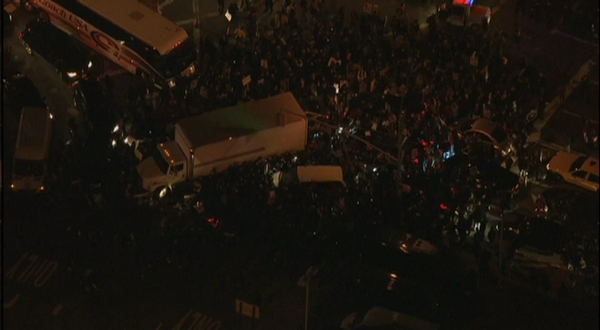
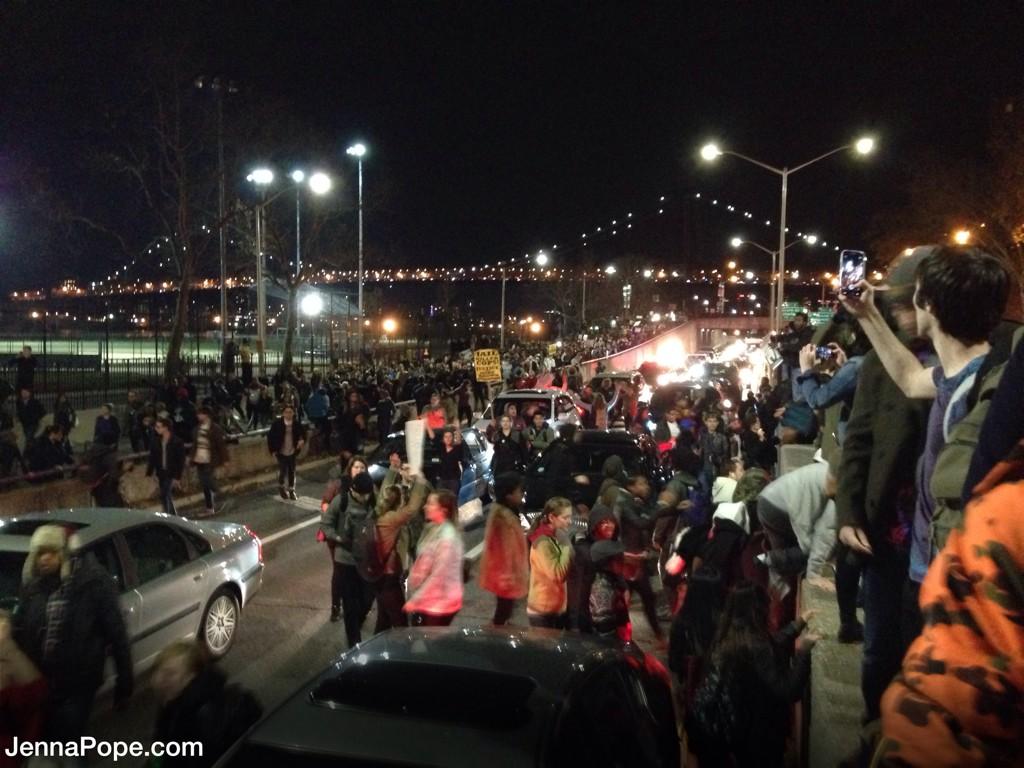
佛恪森抗議者在紐約市造成許多交通死結

Ferguson Protesters Create Mass Gridlock In New York City- 佛恪森抗議者在紐約市造成許多交通死結


Read more: http://www.businessinsider.com/ferguson-protesters-create-gridlock-in-new-york-city-2014-11#ixzz3K9AeUueu

11/26/2014

ferguson protest new york


View image on Twitter


View image on Twitter

View image on Twitter

世界最美的島嶼

Palawan, The Most Beautiful Island In The World, Is Sheer Perfection- 菲律賓的巴垃灣是最美的島嶼,簡直美的無懈可擊-


coron islands

palawan phillipines
coron islands
palawan phillippines

453398449


palawan phillippines

palawan phillipines

11/26/2014